Physical Address
304 North Cardinal St.
Dorchester Center, MA 02124
Physical Address
304 North Cardinal St.
Dorchester Center, MA 02124


Before the seed breaks open, the roots reach downward and leaves ever see the Sun—everything begins with dirt. Or more accurately, with the best gardening dirt you can give your plants. While watering schedules and sunlight often steal the spotlight, soil quietly decides whether your garden struggles or thrives.
And not all dirt is equal, but far from it.
Some soil drains too fast. Some suffocates roots. Others look rich but lack life. Understanding what makes the best gardening dirt isn’t about memorizing formulas—it’s about learning how soil behaves, how plants respond, and how balance is built layer by layer.
Let’s talk about what truly matters beneath the surface.
Hidden from view, soil performs dozens of tasks at once. It anchors plants and stores water. It delivers nutrients and also hosts billions of microorganisms that quietly feed roots in exchange for sugars.
When soil fails, plants show it quickly—yellow leaves, weak stems, and slow growth. When soil works, plants don’t just survive but they flourish.
The best gardening dirt creates a balance between:
Get that balance right, and half your gardening work is already done.
Before improving soil, it helps to know what you’re starting with. Most garden dirt falls into one of these categories.
Dense and sticky when wet, hard as concrete when dry—clay soil holds nutrients well but drains poorly. Roots struggle for oxygen, and plants often suffocate despite adequate watering.
Clay alone is not the best dirt for gardening. But improved dirt can become powerful.
Sandy soil drains quickly and warms early in spring. Sounds good—until nutrients wash away just as fast. Plants dry out faster than expected.
Left untreated, sandy soil lacks staying power.
Smooth and fertile, silt holds moisture better than sand but compacts easily. With proper organic matter, it can support excellent plant growth.
Loam—often called the gold standard—is a balanced mix of sand, silt, and clay. It drains well, holds nutrients, and supports microbial life. When people refer to the best gardening dirt, loam is usually what they’re chasing.
The best dirt for gardening isn’t something you usually buy in a single bag. It’s something you build.
Texture That Supports Roots
Good soil crumbles easily in your hands. It doesn’t form a solid ball, and it doesn’t fall apart into dust. That crumbly texture allows roots to spread freely.
Organic Matter That Feeds the Soil
Compost, leaf mold, aged manure—these aren’t just nutrients. They improve structure, feed microbes, and increase water retention. Organic matter is the heartbeat of the best gardening dirt.
Proper Drainage Without Dryness
Water should soak in, not pool. And it should remain available long enough for roots to absorb it. That balance separates average soil from exceptional soil.
No single soil blend fits every plant. It depends on what you’re growing.
Vegetable Gardens and Nutrient-Rich Dirt
Vegetables demand fertile, loose soil with high organic content. Tomatoes, peppers, and squash—all thrive when nutrients are consistently available.
Raised beds often succeed because gardeners can control soil quality from day one.
Flower Beds and Balanced Garden Soil
Flowers prefer soil that drains well but doesn’t dry out too quickly. Too much nitrogen encourages leaves over blooms, so balance matters.
For flowering plants, the dirt you use for gardening supports steady—not excessive—growth.
Container Gardening and Potting Dirt
Containers need lighter soil mixes. Garden dirt alone compacts in pots, choking roots. The gardening dirt for containers includes compost, coconut coir or peat, and perlite for airflow.
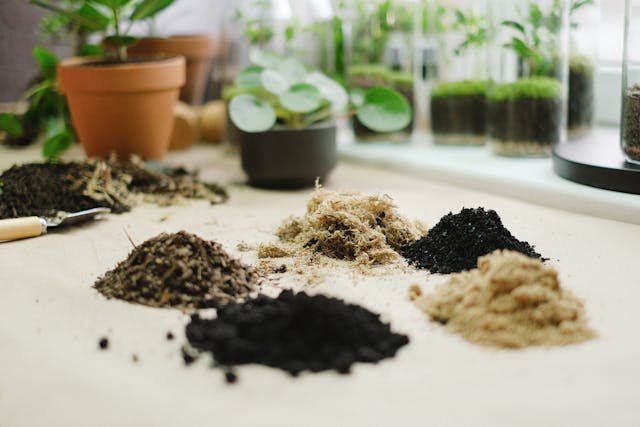
Rarely do gardeners start with perfect soil. Improvement is where transformation happens.
1. Adding Compost for Long-Term Health
Compost improves nearly every soil problem. It loosens clay, enriches sand, and feeds microbes. Apply it yearly, and the soil improves season after season.
2. Mulching to Protect and Build Soil
Mulch does more than suppress weeds. It moderates temperature, retains moisture, and breaks down into organic matter over time—quietly upgrading your soil.
3. Avoiding Soil Compaction
Walking on garden beds compresses air pockets. Compacted soil limits root growth and water movement. Moreover, designated paths protect the structure of the gardening dirt.
Bagged soil can be helpful, especially for raised beds or containers. But not all bags labeled “garden soil” are created equal.
Some are mostly filler. Others lack nutrients. Reading labels matters.
Homemade soil blends—built from compost, topsoil, and organic amendments—often outperform store-bought options over time.
Healthy soil evolves. Nutrients shift—pH changes.
Testing your soil every few years reveals what’s missing—or what’s excessive. Simple tests guide smarter amendments, preventing over-fertilizing and nutrient imbalances.
Plants respond quickly when soil corrections are accurate.
Even experienced gardeners stumble here.
Soil isn’t inert, but it’s alive.
Earthworms aerate it. Fungi transport nutrients. Bacteria break down organic matter into plant-ready forms. When soil life thrives, then plants become more resilient against diseases, drought, and stress.
The gardening dirt supports this underground ecosystem rather than disrupting it.
Gardening success doesn’t start with seeds or tools. It starts with what you can’t see at first glance. Soil, when cared for properly, becomes richer each year. Plants grow stronger, and maintenance becomes easier.
The best gardening dirt is never finished. It’s always improving—just like the gardener tending it.
And once you understand that, everything above ground begins to make sense.