Physical Address
304 North Cardinal St.
Dorchester Center, MA 02124
Physical Address
304 North Cardinal St.
Dorchester Center, MA 02124

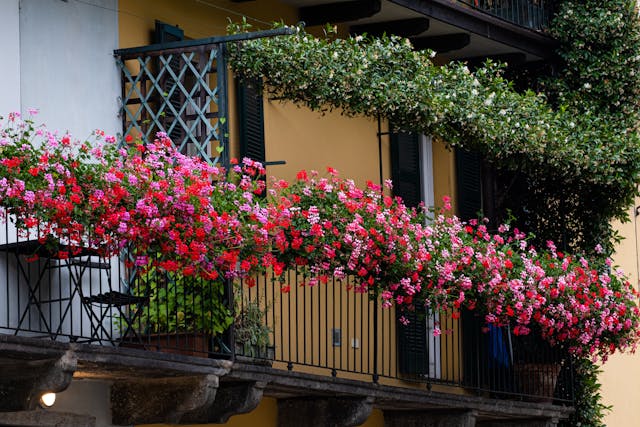
A balcony isn’t a small backyard — it’s a different growing environment with its own rules: more wind, more reflected heat, faster-drying soil, and (often) a weight limit you need to check before you fill it with pots. Get those rules right and even a narrow railing can produce a real harvest. Gardening on an apartment balcony rewards daily attention more than raw effort — you’re close enough to your plants to catch problems (pests, dry soil, a wilting leaf) before they become serious, which is one real advantage over a backyard bed you only visit on weekends.
This is the step most balcony gardening guides skip entirely. Most residential balconies are rated for 50–100 lbs per square foot, but soaked potting soil is heavy — a single 10-gallon pot can weigh 40+ lbs once watered. If you’re planning more than 3–4 medium containers, check your building’s load rating or ask your property manager.
If you’re renting, check your lease for restrictions on drilling into railings, hanging planters over the edge, or exterior modifications — some buildings restrict what’s visible from the street.
Every balcony has its own light pattern based on direction, height, and what’s around it. Spend a day (or a few) actually watching before buying anything:
Container choice affects root health as much as plant choice does:
Whatever the material, drainage holes are non-negotiable — standing water in a container is the fastest way to kill a balcony plant.
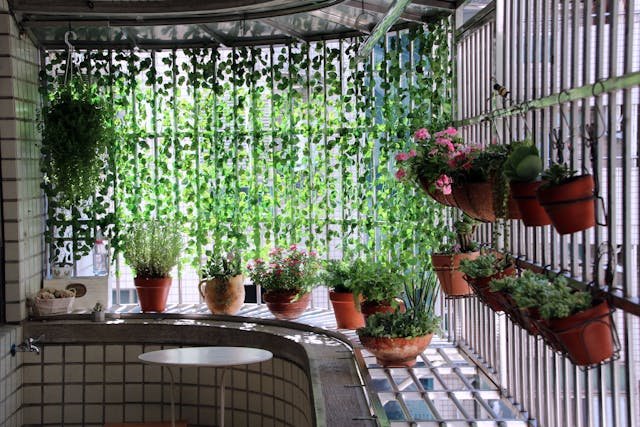
When floor space is limited or off-limits (shared balconies, strict weight limits), going vertical is the highest-yield option per square foot:
Compact and dwarf varieties consistently outperform full-size varieties in confined containers. Look for “patio,” “bush,” or “dwarf” on the seed packet or plant tag:
For a full breakdown of tomato varieties that do best in containers specifically, see our guide to the best tomatoes for container gardening.
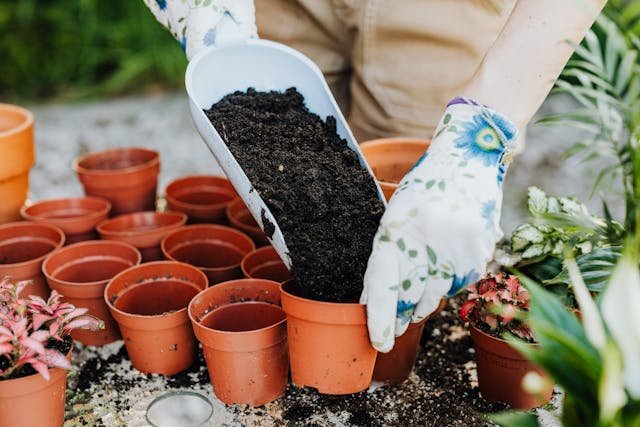
Skip garden soil — it compacts in containers and drains poorly. Use a quality potting mix with compost worked in for nutrients and perlite or vermiculite for drainage.
Balcony containers dry out faster than ground beds because of wind and heat reflecting off walls and railings. In summer, check soil moisture daily by feeling an inch down — don’t rely on the surface, which dries first. Water early morning when possible, so plants are hydrated before peak heat.
For feeding schedules and fertilizer types, see our guide to raised bed and container fertilizer options — the principles apply directly to balcony containers, which need feeding more often than ground soil.
Balconies create their own microclimate — wind funnels through gaps between buildings, and heat reflects off glass and concrete in ways a backyard doesn’t experience. Group pots together to buffer wind and raise humidity slightly, and use taller, sturdier plants on the windward side to shield smaller ones.
| Season | What to Plant |
| Spring | Herbs, lettuce, early flowers |
| Summer | Tomatoes, peppers, cucumbers |
| Fall | Kale, parsley, pansies |
| Mild winter (protected balcony) | Rosemary, thyme, hardy greens |
| Do I need a permit or landlord approval for balcony gardening?
Usually not for pots and containers, but check your lease for restrictions on drilling into railings, hanging planters over the edge, or anything visible from the street — some buildings do restrict this. |
| How much weight can a balcony safely hold?
Most residential balconies are rated for 50–100 lbs per square foot, but this varies by building age and construction. If you’re adding more than a few medium containers, check with your property manager rather than guessing. |
| What are the easiest plants for a first balcony garden?
Herbs (basil, chives, mint) and leafy greens are the most forgiving — they tolerate inconsistent watering better than fruiting plants like tomatoes and peppers. |
| Growing on a balcony with a tricky layout — tiny, shaded, or windy? Tell us about it in the comments, and we’ll help you work out what will actually grow there. |