Physical Address
304 North Cardinal St.
Dorchester Center, MA 02124
Physical Address
304 North Cardinal St.
Dorchester Center, MA 02124


Amid the sun-drenched hills of Tuscany, as the golden afternoon spills over terracotta rooftops, something extraordinary unfolds—a garden breathing with centuries of love and reverence for nature. Italian gardening is more than planting flowers and growing herbs. It is a theater, a certain lifestyle entwined with history and culture. Behind it all lies the deep-rooted Italian charm that seems to come effortlessly.
Or, better yet, why not romanticize it this way? To understand Italian gardening, you need to grasp Italy’s rhythm, its undeniable passion, and its rich heritage. Italian gardens—whether tucked into a sleepy Sicilian courtyard or hugged by the cliffs of the Amalfi Coast—are less about perfection and more about spirit.
While the English cottage gardens tend to embrace a disordered wildness, and French formal gardens are characterized by their rigid symmetry, Italian gardens find harmony somewhere in between—they are a blend of structure and free-spirited creativity. With that being said, the beauty of gardening in Italy stretches far beyond aesthetics. Italian gardens often serve a purpose beyond beauty.
Let’s talk food. Have you ever seen a tomato ripen under the Mediterranean sun? It glows. It radiates. Italian gardeners don’t just plant to please the eye—they grow for the table. Think basil bushes bursting from terra cotta pots, fig trees leaning lazily over stone fences, and rosemary hedges perfuming the air near a rustic patio. In Italy, the garden is as much a kitchen as it is a sanctuary.
And the layout? It’s intentional. You’ll notice levels—terraces that contour the land like the folds of a velvet gown. Why? Because Italy is hilly. Very hilly. And when life gives you vertical land, Italians build retaining walls, carve out platforms, and make gravity their gardening ally.
Now, if you’re picturing a garden without structures, stop right there. Italian gardening is incomplete without a strong architectural backbone. Arched walkways? Yes. Ancient stone walls covered in moss? Always. A pergola dressed in wisteria that sighs in the wind? Essential.
And let’s not forget the fountains. Ah, the fountains! Trickling water echoing against marble basins—because in the blistering Italian summer, shade and water are not luxuries; they’re lifelines. Cypress trees line driveways like silent sentinels, and tall hedges or brick walls offer privacy without sacrificing elegance.
Even timeworn statues—cracked, weathered, dignified—find their way into these green sanctuaries. Why? Because Italian gardening whispers, “Everything ages, but beauty remains.”
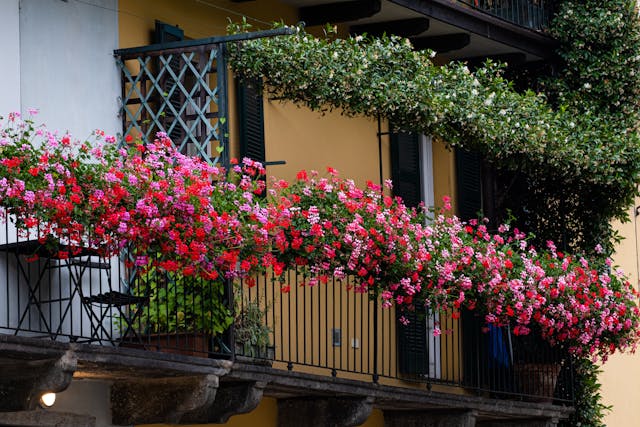
Now let’s talk color—because this is where things get juicy. Italian gardens are never loud, yet never dull. They’re all about that burnished, sun-soaked palette. Think dusty greens, olive, and sage. Burnt sienna from terracotta pots. Pops of lavender. Lemon trees that glow like gold against stone walls. And of course—bougainvillea. That electric, unapologetic pink climbing over balconies like it owns the place.
These aren’t your supermarket blooms, pruned within an inch of their lives. No, Italian plants are wild at heart. They bend, sprawl, and wander. There’s a kind of nonchalance about it all—a lived-in charm, as if the garden is saying, “Yes, I’m beautiful, but I didn’t try too hard.”
You can’t discuss Italian gardening without nodding to its deep roots in history. Renaissance gardens—oh yes, they were the blueprint. Designed to impress, to inspire awe, to show that man could tame nature without destroying it.
These spaces weren’t just for strolling; they were for philosophizing. Talking art. Politics. Religion. Life. In fact, the garden was the original Italian salon.
Even today, the echoes remain. Families pass down gardening traditions like secret recipes. Grandmother’s tending vines that have outlived empires. Grandfathers pruning olive trees older than their own childhoods. Gardening, in Italy, is not a hobby. It’s an inheritance.
Let’s not ignore the obvious. Italy’s climate is a gardener’s dream. Mild winters, long summers, forgiving soils. Everything from citrus to artichokes to grapevines thrives here. You’d have to try not to grow something.
And still, there’s care involved. Water conservation plays a big role, especially in the South. Mulching, timing, and early morning watering—these aren’t just techniques; they’re survival strategies passed through generations.
So, is Italian gardening stuck in the past? Not quite. Modern Italian gardeners are adopting new methods like vertical planting and even hydroponics while still incorporating traditional designs. Rooftop gardens in Rome? Absolutely. Urban herbs grown in recycled wine barrels? Bellissimo.
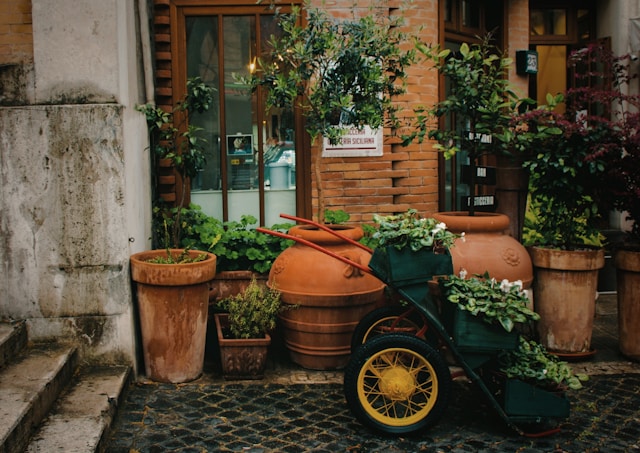
But the soul stays the same. Whether you’re using an old stone planter or a self-watering system, the essence of Italian gardening remains rooted in its devotion to life, beauty, and nourishment.
Ultimately, entering an Italian garden is to enter a new rhythm, one that is perhaps more languorous and savored. A form of sacred calm. An area in which time dawdles while the moving air brings the fragrance of lemons and lavender, where existence occurs in the spaces between the vines and the hushed moments.
Whether you’re planting a fig tree on your balcony or building terraces on a hillside, adopting the principles of Italian gardening means one thing above all: you’re growing more than plants. You’re cultivating intention, tradition, and beauty—one sunlit afternoon at a time.
For more timeless gardening inspiration and expert tips rooted in tradition, explore the full world of green at SowHaven—where every garden tells a story.